BC Children's Hospital Research Institute (BCCHR)
Software Engineer Co-op / Data platform analyst
Timespan
Jan 2026 - Apr 2026
Tools
Figma, React, Expo, Django, Linux
Overview
At BCCHR, I worked in the AI and Data Science Unit on two projects supporting the institute's researchers through internal software and data science services.
My role combined software engineering, data analysis, and user experience design, translating researcher requirements into technical solutions.
Please note that only one of the projects is shown here due to pending confidentiality agreements.
STARFISH
STARFISH stands for Self-management Techniques for Adolescents Recovering from Injury, Surgery or Hospitalization.
My Contributions
- UI/UX Design
- Translating researcher requirements into technical specifications
- Contributing to React Native application development
- Developing a configuration-based onboarding form engine
- Creating local SQLite database scaffolding
- Planning offline-first data architecture
Problem
Adolescents recovering from injury, surgery, or hospitalization are often encouraged to practice wellness activities such as breathing exercises, meditation, and symptom monitoring. However, these resources are frequently disconnected from patients' daily routines, making it difficult to maintain engagement and build healthy habits outside of clinical settings.
STARFISH was created to provide a centralized mobile platform that helps patients discover wellness activities, track their progress, and receive personalized recommendations throughout their recovery journey.
Research & Requirements
Several key requirements emerged during the planning process:
- Patients should be able to access wellness activities as guests, with a path to creating an account and recovering their data later.
- Activities needed to be easy to discover, revisit, and save for later use.
- Progress tracking and daily check-ins should encourage habit formation without feeling overwhelming.
- The application should remain functional without a network connection.
- The interface needed to be accessible and approachable for adolescent users.
These requirements informed both the user experience design and the underlying application architecture.
Design Implementation
To address these requirements, we designed STARFISH to be simple, accessible, and engaging. Its interface lets users browse and access wellness activities without creating an account.
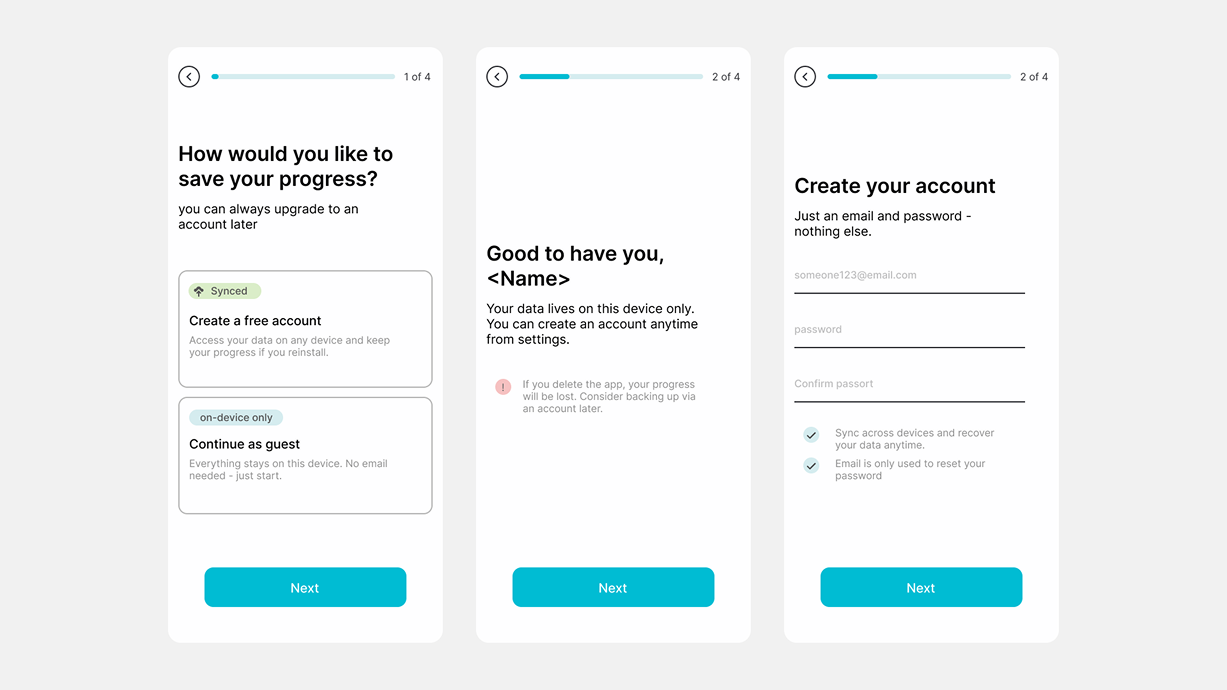
Guest-first onboarding
One of the primary goals was allowing patients to begin using the application immediately without requiring account creation. To support this, the onboarding flow was designed around a guest-first experience while still providing pathways for authenticated accounts and future data synchronization.
The confidential onboarding flow includes a researcher-designed questionnaire that personalizes suggested integrative medicine (IM) modalities for each user. I developed the configuration-based form engine that powers this workflow. Question text, field types, conditional logic, and response options are defined through configuration, allowing researchers to revise questionnaires without changing application code.
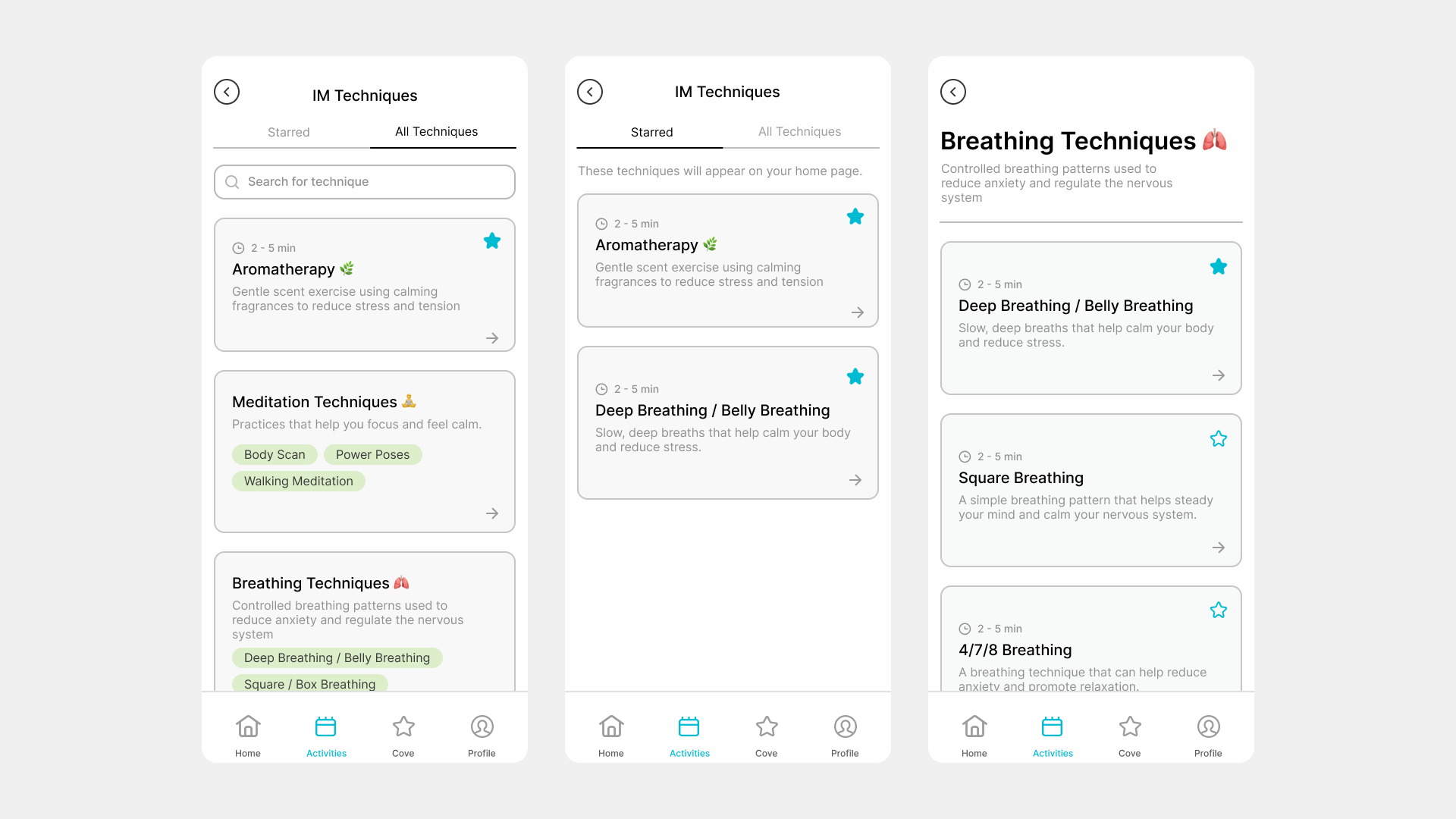
Activity discovery
Patients needed an intuitive way to browse and revisit techniques recommended throughout their recovery journey. Activities were organized into categories and designed with clear information hierarchies to improve discoverability and reduce cognitive load.
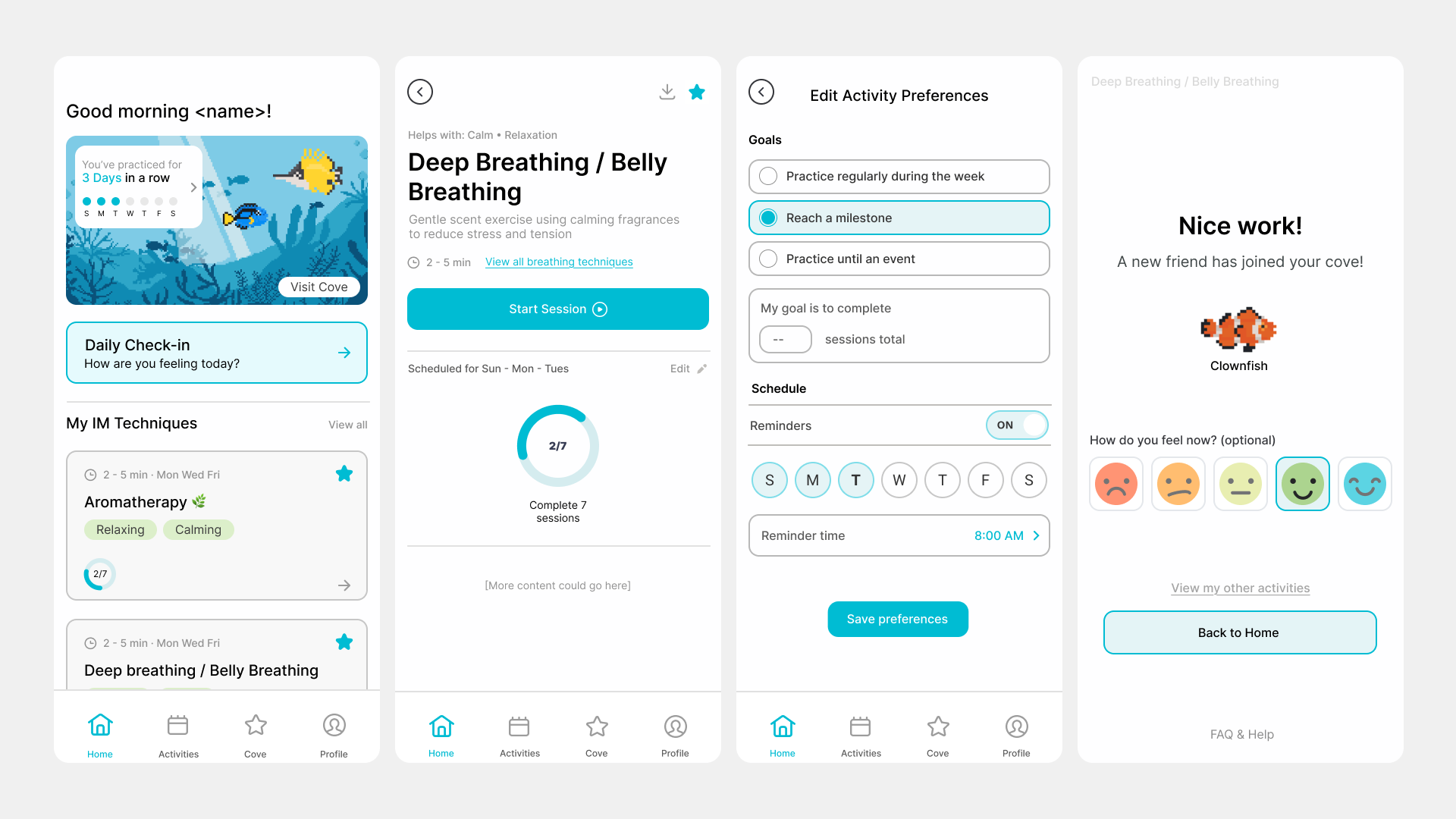
Ongoing engagement
Recovery often spans weeks or months. To encourage continued use, the application included personalized recommendations, progress tracking, and activity management features that helped users build routines and maintain consistency.
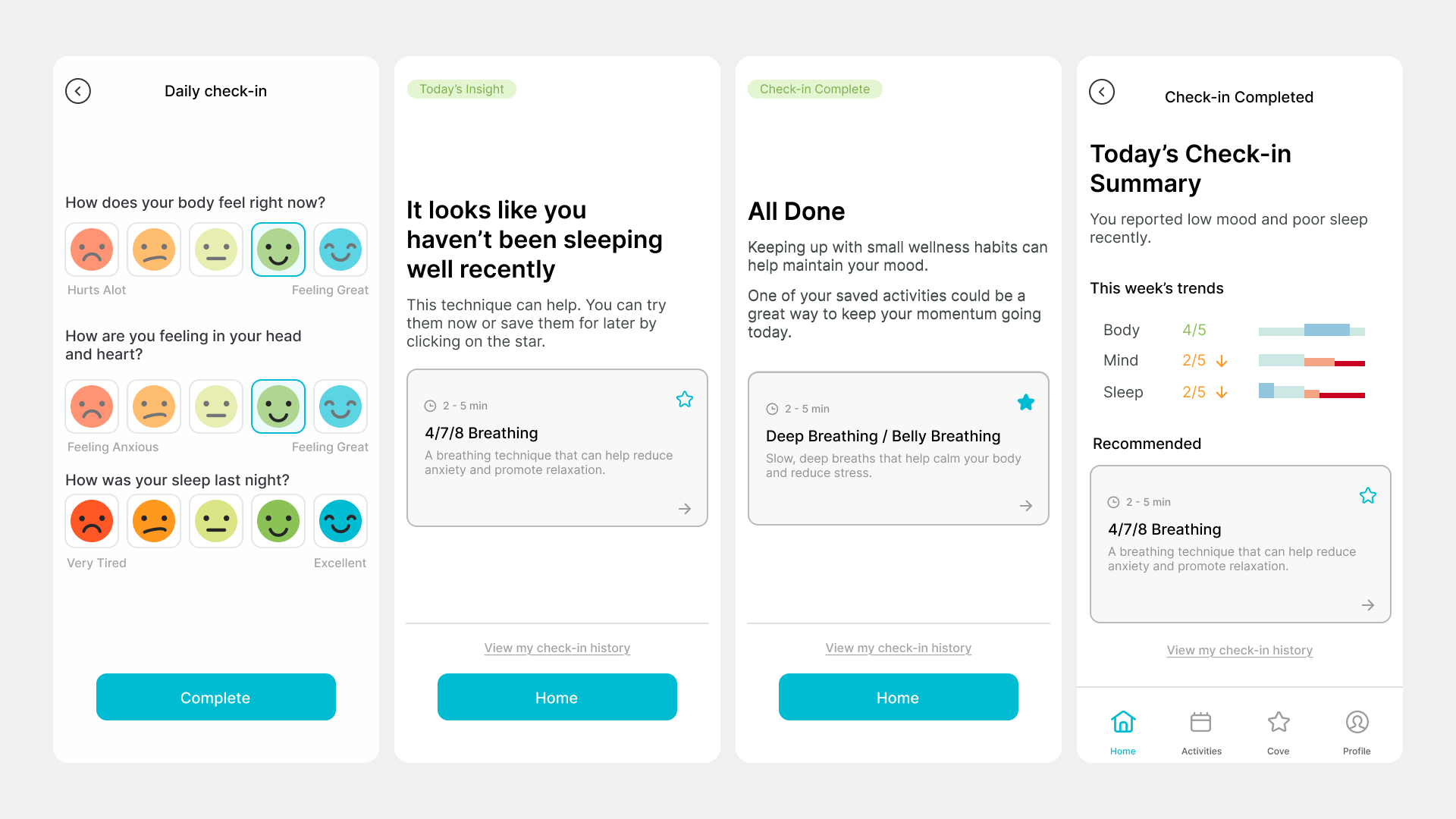
Check-ins and progress tracking
Regular wellness check-ins allow users to monitor their recovery journey while providing researchers with valuable longitudinal data. The check-in experience was designed to be approachable, quick to complete, and easy to revisit over time.
Technical Architecture
Alongside the user experience design, I contributed to the application's technical planning. A primary architectural goal was to support offline use through local persistence while preserving options for future account synchronization and cloud integration.
My contributions included:
- Designing local database schemas
- Planning offline-first data flows
- Defining service layer interactions
- Translating researcher requirements into technical specifications
- Designing onboarding and authentication workflows
- Early React Native development, including the onboarding form engine and local SQLite scaffolding.
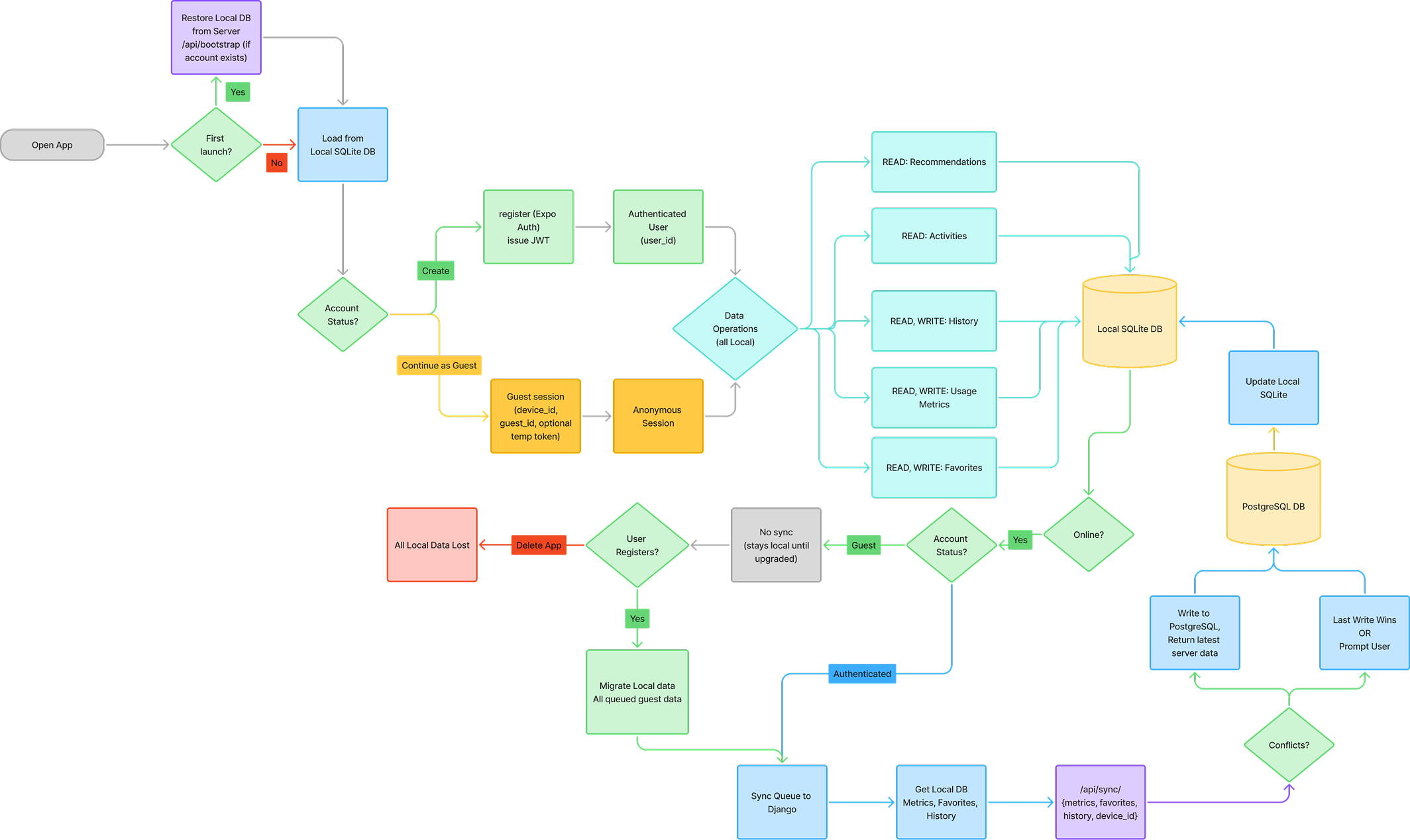
A local-first architecture was chosen to support offline functionality, improve responsiveness, and reduce privacy concerns for guest users. I contributed to the planning of local persistence, synchronization pathways, and service-layer interactions, ensuring the application remained adaptable to future cloud synchronization and analytics requirements.
Reflection
Building the onboarding form engine taught me to separate research content from application behavior. Defining question text, response options, and conditional logic through configuration made questionnaire changes possible without rewriting the form's UI. This gave me a concrete approach to translating evolving researcher requirements into software that could accommodate later revisions.